
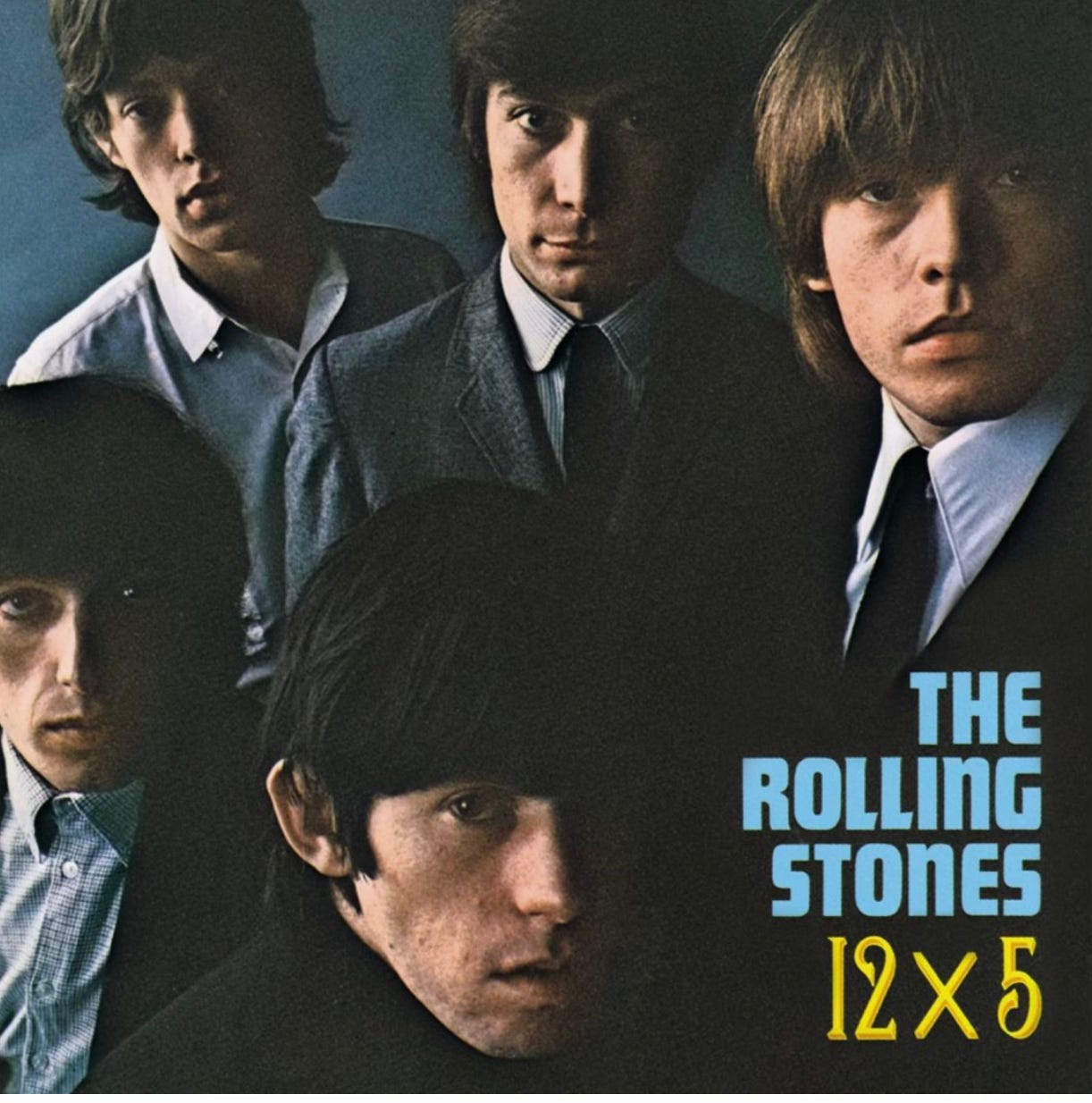
In that front room, beneath the window looking out on the drive, we lined the records up between two cinder blocks. Dylan, Odetta, lots of Beatles, Santana, Aretha Franklin, Leonard Cohen—the album with, on the back cover, Joan of Arc gesturing to God as the flames rose around her . . . For my sisters and I, these records were a constant, each of us vying for command of the turntable. My favorite was 12-X-5 by The Rolling Stones, but I liked nearly all of that music. More than that, I believed in it. From the headlines and the news reports it was clear that this music was transforming the world, spreading love, understanding, righteous anger. And there was no telling where that kind of positive change would end—more social justice was on the way.
Looking back through the lens of Punk, Post-Punk, Post-post-whatever, it’s easy to lampoon that innocence now, but what still strikes me about that period of my childhood is the grandeur of the 1960s. By grandeur I’m drawing on the work of JH Simon, who defines it as an “innate creativity” that inspires us “to become more than we are.” After the defeat of fascism two decades earlier, the U.S. was on fire in all cultural domains, youth culture rising to protest the brutality of an unnecessary and unwise war in Vietnam, in rebellion against the repressive norms enforced by an extractive economy.
Initially, the traumas of Kent State and Altamont that arrived at the end of the decade didn’t seem to detract from the great victories of the Civil Rights era. In retrospect, though, it’s easy to see how the deep currents of American political culture shifted when President Johnson signed the Civil Rights Act of 1965. In political terms, the South was suddenly in play. Under Nixon, the GOP responded with a long-term strategy of dog-whistle racism, setting up the long era of Republican dominance that began with Reagan and continues in its necrotic stage today.
Worth mentioning here is the inherently democratic dimension of music. The beat bypasses conceptual thought to appeal directly to our neurology. Reminding us of our common mortality, the beat echoes the pulse of our hearts. Indeed, in our response to music, we are not so different from other higher mammals. Music draws us toward the social emotions, and toward our own inherent grandeur. Why is social justice our proper fate as a species? Because music.
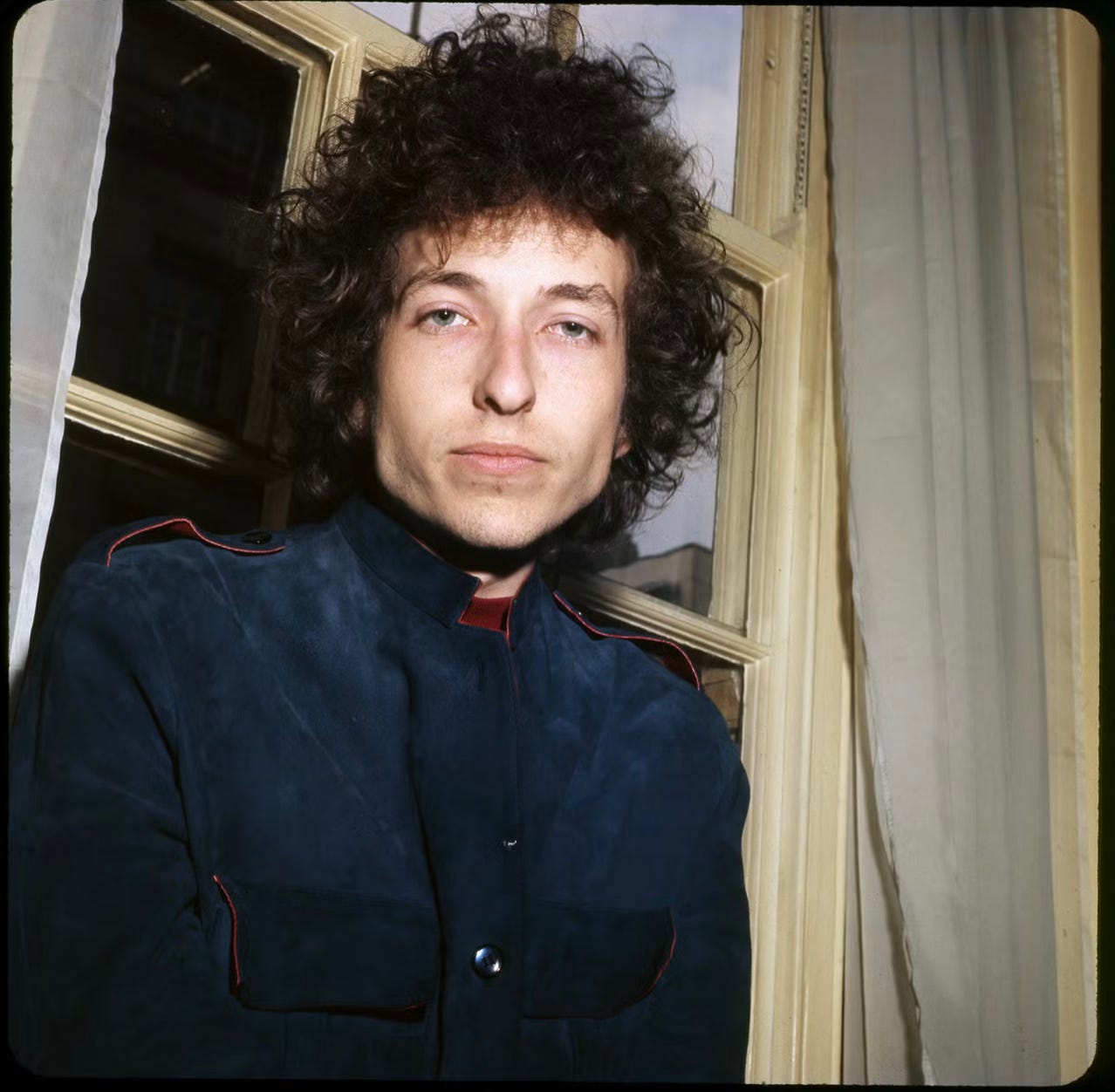
In his work on toxic narcissism, Simon pairs grandeur with its degraded twin—grandiosity—that part of us always wanting “to be bigger and better than other people.” The histor of every spiritual tradition will confirm that no one is ever free of the tendency for grandeur to curdle into grandiosity. All the great musicians of the 60s struggled against this human tendency, which came at them through the challenge of celebrity. A celebrity is a commodity, its value defined by the reductive logic of supply and demand and the laws of competition. If being an artist able to move millions ratified some innate grandeur, the pressures of the marketplace enrolled these artists in a domain that runs on grandiosity pure and simple. Many sought refuge in drugs; others religion. Unable to agree on how to adjust, The Beatles closed up shop. The Stones rode it out by the skin of their teeth, cutting celebrity with a kind of hard-knuckle artisanal attitude. Dylan, in many ways, seemed most stymied by the dynamic, having been, arguably, the richest of them all in terms of grandeur. In various interviews over the years, he has presented himself as just a hard-working songster, with no particular investment in uplift or social change. Listen to a few bars of A Hard Rains Gonna Fall, though, and his underlying grandeur leaps back into view with such vividness it can never be forgotten.
Simon identifies the crucial factor that restrains grandeur from shifting into grandiosity: shame. Shame exists to remind us of our limits, our humility. We need shame to stay mindful of those limits, and to tolerate the limitations of others. So long as we have access to the possibility of redemption, shame makes it possible to form social bonds. Not everyone, however, can tolerate shame in a healthy way. Narcissists, especially, do not allow themselves to feel the shame they generate—others must take care of that for them. Indeed, shamelessness is what makes narcissists so dangerous. Their refusal to feel shame becomes a potent weapon of domination and we are all paying a high price for that today. The relevance of this to contemporary American politics does not need to be pointed out. Where once there was grandeur, today grandiosity chokes the life out of America.
None of this happened just as a matter of course. Today’s demonic America is the result of a long and relentless campaign. Read the infamous Powell Memo from 1971 to see how this campaign began, the business elite and the wealthy striking back against the counterculture that had made such trouble in the previous decade. This campaign of class-warfare-from-above continues unabated today, and according to some rubrics it has been an unqualified success. The early 1970s was the era of maximum income equality in U.S. history, the culmination of a middle-class boom ushered in by FDR in the 1930s. Beginning with Reagan, all that was dismantled piece by piece. Today, each year replaces the last as the year of maximum income inequality. We have now surpassed the ancien regime of pre-Revolutionary France in terms of the degree of inequality, with no end in sight. The metrics are too depressing to repeat but given how central a well-heeled middle class is to the health of the American consumer economy, it’s impossible to see this class warfare as tough medicine designed to lead in the end to some kind of common good. It was always emotional and the emotions were always as dark as they come: hatred born of wounded narcissism.
To see the truth of this, consider how businessmen, in the 70s, began to fight back. The personae they chose to restore their tarnished imageput was not the bland, fatherly figure of the 1950s but rather—wait for it—the rock star. Even today, being called a rock star is the preferred sobriquet of our new captains of industry. They are hungry for a kind of acclaim that can never be extracted from the public. We are drawn to grandeur, not to grandiosity. Making margin on a product does not inspire adoration. Backroom deals may make you rich, but on a cultural level they offer nothing but endless meh. With enough money you can arrange the appearance of charisma, but the reality of it will never arrive. This is so frustrating, of course. Epstein capitalized most of all on that frustration, did he not?
It’s easy to think it’s gone today, that American grandeur our shared music expressed. Black Americans arguably kept it alive for so long. With an immeasurable fortitude forged by centuries of cruelty and injustice, they brought us that killer beat. But where middle class abundance once led to a culture brave enough to question itself, today scarcity is being manufactured to keep us all shivering in our separate holes. Corrosive grandiosity now falls upon us like toxic rain. Engineers, financiers and rich kids have us all trussed up, hanging from hooks in a cultural abattoir the John Birchers of yore couldn’t have dreamt up on their best days. Fascism seethes in stadiums where yesterday dreams of freedom and justice were born, while at every turn, new-fangled machines designed to replace our minds are being forced down our throats. Spiritual death is having its day and no doubt more is on the way. Thank God the wreckage of grandiose projects to become the biggest and the best litter the ditches of history.
I work each week teaching young people how to write. Formed in this era of American fascism, most of my students are terrified of what AI is doing to the world they will need to find meaning in. In our culture, skills are often the ground of identity, so when AI out-skills all human beings, how will we even know who we are? The chance to form a recognizable identity, in other words, is being threatened by this technology. This is why, when engineers like Google’s Eric Schmidt show up to give graduation speeches today, they get booed off the stage.
I sometimes wonder if this assault on identity might inadvertently open new avenues back toward healthy grandeur. By de-coupling skills from identity, will AI accidentally undermine the root premise of capitalism—that competition is the root of the social order? Higher education has, since the 1980s, centered around teaching the young the skills needed to “win” in the zero-sum arena of American capitalism. With competition defining our cutthroat economy, no time to mess around with the grandeur of art or philosophy. The only way to justify your existence is to become the best at some skill that helps make some rich guy richer. Well, AI is changing all that, no? Foreseeing this possibility, the political philosopher Roberto Unger has pointed out that labor can be replaced in our thinking by vocation—while machines may prove better at scut work, there is no end to what humans can do for each other.
Engaging with young people facing this set of challenges has raised a new question: what would it mean to insist on utopia? The dark history of utopian projects points to the need for a healthy dose of pragmatism, no doubt, but utopian thought would at least identify a set of clear and necessary goals. And utopian thought would help clarify some basic organizing objectives. To insist on utopia, for example, requires first a renewal of democracy and a reform of mass media as well. So be it—with jobs everywhere disappearing, what else do we have to fill our time? Let’s get to it.
Thanks Guy. JB--No, rock'n'roll was not a corporate creation "back in the day". Kids made music, kids listened to their friends, music was communal before it was taken up by megacorporations. Where I grew up there was plenty of home grown music going on in garages and small clubs (and there still is, but not so much I fear.) Like Guy said, music loving and music making is in our blood. And A&R people who found talent and brought it into the burgeoning music industry were a different breed than marketing people--but not to split hairs because there WAS a big change into the 70's and yes then there were corporate interests at play. I will always remember reading an ad in Adweek, the ad industry trade publication, placed by Rolling Stone magazine. The headline was, "We've sold you the new generation." It was a gut punch to me--I thought Rolling Stone was "ours"(lol)! By my best recollection, this would have been 1974. By that time rock'n'roll had become synonymous with good ol' boys, White blues, and sugary pop and "we" were moving on to punk, reggae, disco, funk, glam, and SunRa (His Own Category)...Out of the mess I hope vocation wins. Or permanent vacation.